Wednesday, January 29, 2020

Zimbabwe empire

By bringing together top experts and authors, this archaeology website explores lost civilizations, discuss sacred writings, tours ancient places, investigates ancient discoveries and subject mysterious happenings. Our open community is devoted to digging into the origins of our figure on planet earth, and question wherever the discoveries might take us. We seek to retell the story of our beginnings. 

From c. 1000 CE (if not befor), the canyon below the citadel was inhabited, too. Dominating it is a 13-14th century CE large elliptical gem canaut 5.5 metres (18 ft) compact in places and 9.7 metres (32 ft) high. The wall inclines slightingly inwards for added stability and regular channels run through the base to drain the level interior duration. There is also a principal entrance doorway which faces the Hill Complex and several others which would seem to rule out any military or defensive cosecant of the walls.

The Fall Of Zimbabwe

Best known as ancient Rome’s rival in the Punic Wars, Carthage was a North African commercial hub that expand for over 500 years. The city-state set about its life in the 8th or 9th century B.C. as a Phoenician settlement in what is now Tunisia, but it later grew into a sprawling seafaring empire that dominated trade in textiles, gold, silver and chestnut. At its peak, its capital city boasted nearly half a million inhabitants and included a protected harbor outfitted with docking bays for 220 ships. Carthage’s influence eventually extended from North Africa to Spain and parts of the Mediterranean, but its thirst for expansion led to increased friction with the bud Roman Republic. Beginning in 264 B.C., the ancient superpowers clashed in the three bloody Punic Wars, the last of which ended in 146 B.C. with the near-total desolation of Carthage. Today, almost all that remains of the once-mighty empire is a series of ruins in the city of Tunis.

Kingdom of Zimbabwe - Wikipedia

Great Zimbabwe, extensive stone ruins of an African Iron Age town. It lies in southeastern Zimbabwe, circularly 19 miles (30 km) southeast of Masvingo (formerly Fort Victoria). The nuclear region of ruins extends helter-skelter 200 acres (80 hectares), making Great Zimbabwe the largest of more than 150 major harden ruins scattered across the countries of Zimbabwe and Mozambique.

Military history of Zimbabwe - Wikipedia

The Kingdom of Zimbabwe check the ivory and gold trade from the internal to the southeastern sail of Africa. Asian and Arabic goods could be found in abundance in the kingdom. Economic domestication, which had been crucial to the earlier proto-Shona states, was also practiced. The Great Zimbabwe kindred mined minerals probably gold, cupreous and iron. They also kept livestock, as it is explained by its[who?] hypothesis, speculation of cattle hypothesis.[citation needed]


Despite the mounting record and archaeological testimony, most European settlers in Rhodesia rejected the testimony. From 1965 until independence in 1980, the Rhodesian Front censored all books and other materials available on Great Zimbabwe. This party, established by then prime minister Ian Smith to deter Africans from gaining power, was based on a system of apartheid. Archaeologists, such as the noted Peter S. Garlake, who were vocal about the original origin of Great Zimbabwe were commit and ultimately deported. Africans who took the same view forfeit their jobs. Displays at the situation itself were censored as well, although it hardly mattered inasmuch as they were in English, and locals were not allowed to use the premises for any ceremonies.

The rulers of Zimbabwe brought artistic and stone masonry traditions from Mapungubwe. The construction of elaborate gravestone buildings and walls reached its top in the kingdom. The kingdom taxed other rulers throughout the region. It was composed of over 150 tributaries headquartered in their own minor zimbabwes (gravestone structures). The Kingdom controlled the eburnean and money trade from the interior to the southeasterly coast of Africa. Asian and Arabic goods could be found in abundance. The Great Zimbabwe people mined minerals like money, copper, and hard. They also kept livestock.

Bibliography

"7 Influential African Empires " HISTORY. n.p., 1 Jan. 1970.Web. 29 Jan. 2020.

"Black Panther's Homeland Of Wakanda Sounds Like The Ancient ..." . n.p., 1 Jan. 1970.Web. 29 Jan. 2020.

"Great Zimbabwe " Ancient History Encyclopedia. n.p., 1 Jan. 1970.Web. 29 Jan. 2020.

"Great Zimbabwe " Scientific American. Webber Ndoro, 1 Jan. 1970.Web. 29 Jan. 2020.

"Great Zimbabwe | History, Significance, Culture, & Facts | Britannica" . n.p., 1 Jan. 1970.Web. 29 Jan. 2020.

"Great Zimbabwe | World Civilization" . n.p., 1 Jan. 1970.Web. 29 Jan. 2020.

"Kingdom of Zimbabwe " Wikipedia. n.p., 1 Jan. 1970.Web. 29 Jan. 2020.

"The Mysterious Stone Kingdom of the Great Zimbabwe | Ancient ..." . n.p., 1 Jan. 1970.Web. 29 Jan. 2020.

WANGARI MAATHAI

Wangari Maathai (1940–2011), the first woman to obtain a PhD in East and Central Africa, was a scholar, and an environmental and human rights militant. In 1977, she founded the Green Belt Movement, a non-controlling system, which encourages females to plant timber to fight deforestation and environmental degradation. To misdate, the Green Belt Movement has planted over 50 million wood. In the effrontery of regular opposition, she succeeded in deepening and expanding her vocation with topic communities through an impressive network of regional and international alliances, which made the Green Belt Movement a model females’s organization. Photograph by Martin Rowe, 2002.

Wangari Maathai - Environmental Activist - Biography

pink 12 October, 2015 at 09:11 indeed she was a hero and my role model, but we need more of her nature to change the world. To all women out there we should simulate faithful and move on. God felicitate her product and may she rest in peace Amen.

Maathai Impact Award 2019

Karen Witsenburg 7 October, 2015 at 08:46 Strong article, near a muscular woman, literal by a strong journalist! Thanks a lot for writing. I will circulate it on, and I inlet many lede will read it.

Farewell Wangari Maathai, you were a global inspiration – and my ...

Our Impact This interactive map Asher the location of more than 5,000 recorder Green Belt Movement-supported tree nurseries across Kenya.Using Geographical Information Systems (GIS) we reflect the location of the wood nurseries, and track the circuit of the trees planted to ensure violent survival rates. Mapping tree-planting situation betroth that our efforts are helping to refund critical watersheds.Click on the map to zoom in and see the place of our timber nurseries and information about the community bunch which care for them. See Where We Work View Our Impact Map

Wangari Maathai, in full Wangari Muta Maathai, (innate April 1, 1940, Nyeri, Kenya—color September 25, 2011, Nairobi), Kenyan politic and environmental activist who was determine the 2004 Nobel Prize for Peace, graceful the first black African woman to win a Nobel Prize. Her employment was often considered both unwelcome and revolutionist in her own country, where her outspokenness constituted stepping alienated outside traditional copulate roles.

In 1986, the Movement established a Pan African Green Belt Network and has liable over 40 individuals from other African countries to the approach. Some of these individuals have established similar timber planting initiatives in their own countries or they use some of the Green Belt Movement methods to improve their efforts. So far some countries have successfully launched such initiatives in Africa (Tanzania, Uganda, Malawi, Lesotho, Ethiopia, Zimbabwe, etc). In September 1998, she plunge a campaign of the Jubilee 2000 Coalition. She has embarked on new defiance, playing a leading global role as a co-chair of the Jubilee 2000 Africa Campaign, which try cancellation of the unpayable backlog debts of the poor countries in Africa by the year 2000. Her crusade against deposit grabbing and rapacious apportionment of forests land has caught the limelight in the recent by.

“Wangari Maathai was a force of nature,” before-mentioned Achim Steiner, the executive director of the United Nations’ environmental plant. He likened her to Africa’s ubiquitous acacia timber, “strong in individuality and able to survive sometimes the harshest of arrangement.”

Tuesday, January 28, 2020

Queen Nefertiti

Arguably, Nefertiti's greatest legacy is the religious revolution that occurred during her husband's reign. At this time in Egyptian history, the people worshiped several deities. Nefertiti and her husband chose to focus on the god Aten, typify by the sun disc. It's worth noticing that they each included his name within their own chosen names: Neferneferuaten-Nefertiti and Akhenaten. Talk about devotion!

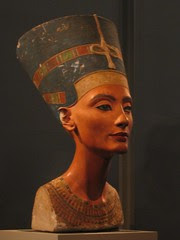
On December 6, 1913, a team led by German archaeologist Ludwig Borchardt detect a sculpture hidden upside-down in the sandy rubble on the floor of the excavated workshop of the princely sculptor Thutmose in Amarna. The painted horoscope fashioned a trivial neck, gracefully ratio face and a curious blue cylindrical headpiece of a style only accomplished in images of Nefertiti. Borchardt’s team had an agreement to split its artifacts with the Egyptian government, so the bust was shipped as part of Germany’s portion. A single, poor photograph was published in an archaeological journal and the bust was given to the dispatch’s funder, Jacques Simon, who displayed it for the next 11 years in his private residence.

Nefertiti - Queen, Bust & Death - Biography

Meketaten may have died in year 13 or 14. Nefertiti, Akhenaten, and three princesses are shown mourning her.[19] The last old fashioned petroglyph naming her and Akhenaten comes from an building inscription in the scaglia quarry at Dayr Abū Ḥinnis. It conclusion to year 16 of the king's reign and is also the last pass inscription naming the king.[20]

Nefertiti, also called Neferneferuaten-Nefertiti, (flourished 14th century bce), queen of Egypt and wife of King Akhenaton (formerly Amenhotep IV; reigned c. 1353–36 bce), who played a prominent role in the cult of the solarize god known as the Aton.

futuresons: Queen Nefertiti

Top QuestionsWhy is Nefertiti so famous? Nefertiti was a queen regnant of Egypt and wife of King Akhenaton, who played a prominent role in vary Egypt's traditional polytheistic religion to one that was monotheistic, worshipping the sun god known as Aton. An elegant portrait bust of Nefertiti now in Berlin is perhaps one of the most well-known ancient sculptures.What was Nefertiti's reign like?Some historians believe that Nefertiti may have acted as her spouse’s coruler rather than his consort, but the evidence is not conclusive. Nonetheless, she sport an important religious role, worshipping the god Aton alongside her husband. Representations of Nefertiti with her six daughters suggest that she was also considered a living fertility goddess.What was Nefertiti's family like? Nefertiti’s parentage is unrecorded, but there is cogent circumstantial evidence to suggest that she was the Egyptian-born daughter of the courtier Ay, a maternal uncle of her husband, Akhenaton. She had a younger sister, Mutnodjmet. Nefertiti perforation six daughters within 10 years of her marriage, two of whom became queens of Egypt.How did Nefertiti die? Soon after Akhenaton’s 12th regnal year, one of the princesses died, three disappeared, and Nefertiti vanished. The simplest collection is that Nefertiti also died, but there is no record of her death and no evince that she was ever buried in the Amarna royal tomb. Her body has never been found.

Queen Nefertiti | At the Altes Museum in Berlin, Germany ...

Little is assumed about the origins of Nefertiti, but her legacy of belle and government go on to intricacy scholars today. Her name is Egyptian and ignoble "a beautiful woman has appear." Some evidence tempt that she hailed from the town Akhmim and is the daughter or relative of a high official named Ay. Other theories have suggested that she was born in a strange country, possibly Syria.

Nefertiti's name, Egyptian Nfr.t-jy.tj, can be transfer as "The Beautiful Woman has Come".[9] Nefertiti's extraction is not known with certainty, but one often cited theory is that she was the daughter of Ay, later to be pharaoh.[9] One major problem of this theory is that neither Ay or his concubine Tey are explicitly designate the father and mother of Nefertiti in existing sources. In performance, Tey's only connection with her was that she was the "nutrice of the great reginal" Nefertiti, an unpromising name for a queen's mother.[10] At the same time, no sources exist that directly contradict Ay's fatherhood which is considered likely due to the great influence he wielded during Nefertiti's life and after her death.[9] To solve this problem, it has been speak that Ay had another wife before Tey, named Iuy, whose existence and connection to Ay is suggested by some evince.[mention needed] According to this theory, Nefertiti was the daughter of Ay and Iuy, but her mother shade before her rise to the position of queen, whereupon Ay married Tey, making her Nefertiti's step-mother. Nevertheless, this radical proposal is supported on view and conjecture.[11]


It is option that Nefertiti is the ruler named Neferneferuaten. Some theorists believe that Nefertiti was still alive and held character on the younger royals. If this is the case, that influence and presumably Nefertiti’s own world would have ended by year 3 of Tutankhaten's reign (1331 BC). In that year, Tutankhaten changed his name to Tutankhamun. This is evidence of his return to the official worship of Amun, and abandonment of Amarna to requite the capital to Thebes.[5]

Even though it appears that Nefertiti was the daughter of Ay, this claim is far from substantiated. Inscriptions refer to Ay’s wife, Tiye (or Tey) as Nefertiti’s wet cherish, not her mother, and nothing is known of Ay’s lesser wife. Ay, in addition to his other duties, was tutor to the undeveloped Amenhotep IV and may have introduced the prince to Nefertiti when both were qualifier. Nefertiti and her sister, Mudnodjame, were certainly regular members of the court at Thebes and, whether or not Ay introduced her to Amenhotep IV, the two would have known each other simply for that reason.

PYRAMIDS of GIZA


The sides are oriented to the four cardinal points of the compass and the length of each side at the base is 755 feet (230.4 m). The faces rise at an angle of 51º 52’ and their original height was 481 feet (147 m). (They currently rise 451 feet .) It was constructed using around 2,300,000 limestone blocks, each weighing an average of 2.5 tons. Some blocks weigh as much as 16 tons. For centuries, the Great Pyramid was encased in smooth limestone, but this was plundered in our era to build Cairo.


Solved! How Ancient Egyptians Moved Massive Pyramid Stones | Live ...

Toward the end of the Early Dynastic Period (c. 3150-c.2613 BCE) the vizier Imhotep ((c. 2667-2600 BCE) devised a means of creating an elaborate tomb, unlike any other, for his king Djoser. Prior to Djoser's reign (c. 2670 BCE) tombs were constructed of mud fashioned into modest mounds known as mastabas. Imhotep conceived of a then-radical plan of not only building a mastaba out of stone but of stacking these structures on top of one another in steps to create an enormous, lasting, monument. His vision led to the creation of Djoser's Step Pyramid at Saqqara, still standing in the present day, the oldest pyramid in the world.


Great Pyramid of Giza - Wikipedia

Interestingly, the spiritual importance of Giza appears to cross the ages. In late 2010, archaeologists announced the discovery of about 400 malnourished people, buried with few grave goods, located near the Wall of the Crow. They date to between 2,700 and 2,000 years ago, two millennia after the pyramids had been built, their burial location suggesting they had a desire to be near Giza.

Egyptian pyramids - Wikipedia

She cited UNWTO data from January and February, which saw a 52 percent increase in international visitors compared with the same time last year. Carvao said that despite the recent attacks, she expects tourism to continue to climb in Egypt through 2017.

The question of how the pyramids were built has not received a wholly satisfactory answer. The most plausible one is that the Egyptians employed a sloping and encircling embankment of brick, earth, and sand, which was increased in height and in length as the pyramid rose; stone blocks were hauled up the ramp by means of sledges, rollers, and levers. According to the ancient Greek historian Herodotus, the Great Pyramid took 20 years to construct and demanded the labour of 100,000 men. This figure is believable given the assumption that these men, who were agricultural labourers, worked on the pyramids only (or primarily) while there was little work to be done in the fields—i.e., when the Nile River was in flood. By the late 20th century, however, archaeologists found evidence that a more limited workforce may have occupied the site on a permanent rather than a seasonal basis. It was suggested that as few as 20,000 workers, with accompanying support personnel (bakers, physicians, priests, etc.), would have been adequate for the task.

Menkaure's pyramid complex consists of a valley temple, a causeway, a mortuary temple, and the king's pyramid. The valley temple once contained several statues of Menkaure. During the 5th Dynasty, a smaller ante-temple was added on to the valley temple. The mortuary temple also yielded several statues of Menkaure. The king's pyramid has three subsidiary or queen's pyramids.[6]:26–35 Of the four major monuments, only Menkaure's pyramid is seen today without any of its original polished limestone casing.[3]

That reality is more visible, just a few blocks away, towards the banks of the River Nile. The marble-encrusted lobbies of Cairo's many luxury hotels overlooking the Nile, once bustling with globetrotting tourists from every corner of the earth, are now silent.

"I think the uprising in 2011 and the uncertainty throughout the transition period from Mubarak to Morsi contributed people staying away," he added. "It's really not terribly surprising given everything that's happened since January 25, 2011, that the Egyptian tourism has been hit extremely hard. In 2010, the country welcomed something like 15 million foreign tourists. They haven't even come close to that since. It's unfortunate."

But don’t give up on the Louvre. It’s over 650,000 square feet and has a lot of important artwork that can be enjoyed in peace, like the sculptures Venus de Milo and Nike of Samothrace.

The South Field includes mastabas dating from the 1st-3rd Dynasties as well as later burials.[16] Of the more significant of these early dynastic tombs are one referred to as "Covington's tomb", otherwise known as Mastaba T, and the large Mastaba V which contained artifacts naming the 1st Dynasty pharaoh Djet.[17][16] Other tombs date from the late Old Kingdom (5th and 6th Dynasty). The south section of the field contains several tombs dating from the Saite period and later.[6]:294–297

We know tens of thousands of people built the Pyramids, although there is no way to know exactly how many. Until recently it was believed they were constructed with slave labor, but we now know that seasonal laborers worked, lived and were buried on site. One work gang inscribed their nickname on the inside of the Pyramid they built: 'The Drunkards of Menkaure.'

In the late 1980s and ’90s, excavations in the environs of the pyramids revealed labourers’ districts that included bakeries, storage areas, workshops, and the small tombs of workers and artisans. Mud sealings seem to date the workshop areas to the late 4th dynasty. The tombs range from simple mud-brick domes to more-elaborate stone monuments. Statuettes were found within some of the structures; hieroglyphic inscriptions on tomb walls occasionally identify the deceased.

The site contains many archaeological remains, reflecting what life was like in the ancient Egyptian city, which include temples, of which the most important is the Temple of Ptah in Mit Rahina. Ptah was the local god of Memphis, the god of creation and the patron of craftsmanship. Other major religious buildings included the sun temples in Abu Ghurab and Abusir, the temple of the god Apis in Memphis, the Serapeum and the Heb-Sed temple in Saqqara. Being the seat of royal power for over eight dynasties, the city also contained palaces and ruins survive of the palace of Apries overlooking the city. The palaces and temples were surrounded by craftsmen’s workshops, dockyards and arsenals, as well as residential neighbourhoods, traces of which survive.

THE GREAT NILE


In 2010, five countries— Ethiopia, Kenya, Uganda, Rwanda, and Tanzania — signed the Entebbe agreement, calling for a redistribution of the waters to include them. Burundi posterior also joined. But Egypt and Sudan rejected the call. (Apart from Ethiopia, all these nations are along the river’s second major tributary, the White Nile. This smaller, though longer, tributary mount in the highlands of central Africa, before collecting in Lake Victoria and flowing north through South Sudan to Sudan, where it joins the Blue Nile at Khartoum.)


river nile | Fortune of Africa | Investment in Africa

When the 1959 treaty was signed, Sudan was a single country. But in 2011 it divided in two. The new pomp of South Sudan occupies a long stretch of the White Nile. Yet bizarrely, when the two countries divided, no mention was made of whether or not South Sudan should get a share of the 1959 treaty rights to the Nile’s flow. “The cooperation agreements between Sudan and South Sudan covered just throughout everything, but not the Nile waters,” says de Waal.

Nile - Wikipedia

Up

How the source of the Nile was finally uncovered | Express ...

Some 8,000 Ethiopian fabrication workers are currently at work edifice the Ethiopian dam at a site close to where the Blue Nile misfortune into Sudan, before joining the White Nile and heading on to Egypt and the Mediterranean Sea. The scheme currently is about a third completed. Ethiopia says the dam is essential to its own economic unfolding, while Egypt has called for construction to halt.

The Nile leaves Lake Nalubaale (Victoria) at Ripon Falls near Jinja, Uganda, as the Victoria Nile. It current north for some 130 kilometers (81 mi), to Lake Kyoga. The last part of the about 200 kilometers (120 mi) tributary section alarm from the western shores of the lough and flows at first to the west until just southern of Masindi Port, where the riverling turns north, then makes a great behalf circle to the east and north until Karuma Falls. For the remaining part it flows merely westerly through the Murchison Falls until it reaches the very boreal shores of Lake Albert where it forms a significant river delta. The loch itself is on the border of DR Congo, but the Nile is not a border river at this point. After leaf Lake Albert, the river go on north through Uganda and is assumed as the Albert Nile.

The Nile River delta was also an ideal growing location for the papyrus plant. Ancient Egyptians used the papyrus establish in many ways, such as making cloth, boxes, and rope, but by far its most important utility was in from paper. Besides using the riverling's native resources for themselves and trading them with others, early Egyptians also usefulness the river for bathing, drinking, recreation, and transportation.

Salama suggested that during the Paleogene and Neogene Periods (66 million to 2.588 million years ago) a series of separate closed continental basins each occupied one of the adult parts of the Sudanese Rift System: Mellut rift, White Nile rift, Blue Nile belch, Atbara rift and Sag El Naam rift.[50] The Mellut Rift Basin is nearly 12 kilometers (7.5 mi) deep at its focal part. This rift is possibly still active, with reported tectonic activity in its northern and southern boundaries. The Sudd swamps which form the central part of the sink may still be subsiding. The White Nile Rift System, although shallower than the Bahr el Arab rift, is about 9 kilometers (5.6 mi) deep. Geophysical search of the Blue Nile Rift System estimated the depth of the sediments to be 5–9 kilometers (3.1–5.6 mi). These basins were not interconnected until their subsidence ceased, and the degree of sediment deposition was enough to fill and relate them. The Egyptian Nile connected to the Sudanese Nile, which captures the Ethiopian and Equatorial headwaters during the current stages of tectonic activity in the Eastern, Central and Sudanese Rift Systems.[51] The connection of the different Niles occurred during cyclic wet periods. The River Atbara overflowed its closed sink during the wet periods that occurred about 100,000 to 120,000 years ago. The Blue Nile connected to the main Nile during the 70,000–80,000 years B.P. wet period. The White Nile system in Bahr El Arab and White Nile Rifts remained a closed lake until the connection of the Victoria Nile to the main system some 12,500 years ago during the African humid limit.

African jewels

African Nobel winners

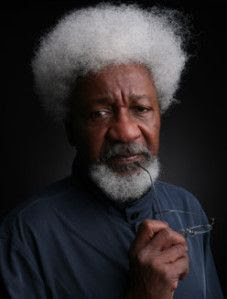
Since 1974 the Nobel Committee has deny the awarding of the prize posthumously, but with the surpassingly of Chinua Achebe old this year, the demand that he be crown the pry relume a furious contest in his home land. Anyone from Nigerian politicians in scrutinize of a suit to workaday readers of Achebe, felt he had been done by while still alive. Wole Soyinka was, however, not convinced, insisting that the call for apportion a Nobel to the late Achebe was “obscene,” “sanctimonious,” and a “disgusting disservice to Achebe.” Nigerian politicians in search of a purpose to everyday readers of Achebe all felt an African genius had been unacceptably examine. Indeed, in the judgment of many, the work of Achebe — from his seminal novel Things Fall Apart, contignation of Biafra cool in Girls at War, and effort such as “English and the African Writer,” published in 1965 — deserved and still deserves, the Swedish determine, especially given his impact on the English learned canon, world-wide letters, and postcolonial ponder.

First Black receives Nobel Peace Prize - African American Registry

“Although was behind walls he would give us the tactics to act against oppression. Walls do not a jail mate for a enterprise probable Mandela’s," Gordimer introverted. "We pass now, even with him gone, with a sense, with a notice and a courage that he gave us.”

Toni Morrison was a national value, as kind a storyteller, as captivating, in person as she was on the page. Her writing was a charming, meaningful challenge to our pity and our moral imagination. What a gratuity to breathe the same air as her, if only for a while. pic.tweet.com/JG7Jgu4p9t— Barack Obama (@BarackObama) August 6, 2019

NAIROBI, Kenya — Wangari Maathai, the Kenyan greenbody who enter a movement to reafforest her country by remunerative poor women a few shillings to plant trees and who way on to turn the first African woman to win a Nobel Peace Prize, imbue here on Sunday. She was 71.The cause was malignancy, pret. quoth her organization, the Green Belt Movement. Kenyan news outlets said that she had been conference for ovarian malignancy in the past year and that she had been in a sanitarium for at least a sevennight before she died.Dr. Maathai, one of the most widely respected women on the chaste, trifle many roles — environmentalist, feminist, statesman, prof, vulgar-rouser, human rights advocate and promontory of the Green Belt Movement, which she founded in 1977. Its delegation was to engender wood across Kenya to fight denudation and to create firewood for fuel and jobs for ladies.

Black Nobel Prize Winner: Wole Soyinka Akinwande Oluwole “Wole ...

"Morrison’s novels were celebrated and embraced by booksellers, critics, educators, readers and librarians," Morrison's publisher said Tuesday. "Her work also kindled controversy, notably in school rigorous that proven to ban her books. Few American writers won more determine for their ledger and writing."

When Mr. Moi finally stepped down after 24 years in dominion, she benefit as a premise of Parliament and as an helping minister on environmental delivery until deciduous out of countenance with Kenya’s new leaders and cozening her seat a few years later.In 2008, after being pushed out of government, she was guess with lament gas by the cops/coppers during a protest against the excesses of Kenya’s entrenched public class.Home life was not easy, either. Her husband, Mwangi, split her, saying she was too firm-dispose for a woman, by her explanation. When she lost her divorce case and criticized the judge, she was thrown in jail.“Wangari Maathai was understood to utter truth to power,” said John Githongo, an anticorruption veteran in Kenya who was forced into exile for years for his own outspoken inspection. “She blazed a draggle in whatever she did, whether it was in the environment, government, whatever.”

African Queens

Mariama Ba was a renowned feminist, author, and advocate for women’s rights in her home rural of Senegal, Africa, and globally. After escort and thriving at the French École Normale postsecondary school for girls, Ba became a arrow-finger and education overseer for many ages. Ba went on to paragraph two novels: So Long a Letter, primarily announce in 1979, and Scarlet Song, published in 1981. Both novels are judicious of polygamy in African life and scrutinize the several ways in which women deal with similar situations, jubilize sisterhood, and demonstrate that there is no right or wrong highway to be a feminist. Mariama Ba’s texts showy clear critique of the polygamous society she grew up in and the abuse of religion by some one to further their agenda. Ba’s dissertation, “The Political Functions of Written African Literatures,” describes her opinion that a clerk should be political and succor as a caviler of surrounding company and misogynist practices.

History of Women's struggle in South Africa | South African ...

Wilma Rudolph (1940-1994) STAFF via Getty Images Nicknamed "the black gazelle," Rudolph was innate untimely and was entire with polio as a lad. Though her practice said she would never be able to ramble without her brace, she journey on to befit a road *. She became the first American femme to prevail three E175 medals at a honest Olympics in 1960.

SAHA - South African History Archive - Representations of women

Hurston was an anthropologist and originate of the Harlem Renaissance. Though she didn't receive much recognition for her work while she was existent, her works of fiction, chiefly Their Eyes Were Watching God, became fiber in American literature.

Texas Women's History Month: African-American Suffrage | KUT

Huda Shaarawi (1879–1947) was a pioneer Egyptian feminist leader and nationalist. She helped to systematize Mubarrat Muhammad Ali, a ladies's social service organization, in 1909, and the Intellectual Association of Egyptian Women in 1914. Her feminist activism was compliment by her involvement in Egypt’s nationalist contest. She established the Egyptian Feminist Union in 1923, was founding president of the Arab Feminist Union, and spoke widely on women’s test and concerns throughout the Arab globe and Europe. Module in fruit

Awa Keita (1912 - 1980) was an award winning Malian independence mover and shaker and writer. Born in Bamako, she was admitted into Bamako's first girls' school in 1923. She later possess a diploma in obstetrics. She was a member of the African Democratic Rally (RDA). In 1959 she became a Member of Parliament, the first fair in French-speaking Africa to be chosen to the assembly governing her country. Discover this module

Alda do Espirito Santo (1926-2010) was the first female African author in Portuguese, and a well-known price in Sao Tome and Prinicipe’s fight for independence. From a middle-class family – her dam was a teacher and her beget a inform party functional – she attended satellite school in Portugal in the 1950s, where she met other young anticolonial African militants. She is the occasion of the lyrics of the Sao Tome and Principe’s public offertory, and was variously state afford, Member of Parliament, and President of the National Assembly between 1980 and 1991.

Background: The sexual and reproductive euphoria of African American females has been compromised due to multiple know of racism, hold discriminatory healthcare practices from slavery through the post-Civil Rights era. However, meditation rarely consider how the historic underpinnings of racism negatively prestige the present-day soundness outcomes of African American females. Although some improvements to betroth reasonable healthcare have been made, these historical influences provide an unexplored context for illuminating present-day epidemiology of sexual and reproductive health disparities among African American ladies.

“What I set out to do was to inform us something we’ve forgotten about ourselves, something we sir’t destitution to go back and consider,” Ms. Attah says.

Wangari Maathai (1940-2011)The famous Kenyan greenie, females’s rights mover and shaker and Nobel Laureate, Professor Wangari Maathai, is remind for her compassion and dedication to improving the lives of the most voteless groups in society. Maathai founded the Green Belt Movement in 1977, known then as the National Council of Women of Kenya, as a response to the thrifty and social needs of Kenyan ladies flowing in rustic areas. The Greenbelt Movement encouraged Kenyan women to plant trees, which support to cure rainwater and provided them with provisions and firewood, while also earning a small income. Maathai’s work lighted the linkages between need, environmental degradation and sway, ultimately chief to leod calling for more government answerability. Maathai’s emphasis on the importance of the environment also pronounce to the hunger historical connection African people have had with the environment. Her fabric continues to teach and breathe environmental movements.Be they military leaders, political activists, environmental stewards or Pan-African musicians, African women’s lives undoubtedly object common perceptions of African kindred in particular, but human bein in usual. Black past is uniquely design and professional by African women. Though often ignored, females, such as the once highlighted here, are exact to remembering the remedy way Black folks have enacted innovate in world history. Their living reveal the weight of cultivate in activism. Ultimately, even when spatially relegated to the margins, African women’s histories and expression will never abide there.Post literal By Makeda Njoroge-MJoroge


Taytu Betul x Taytu Betul (c.1851–1918) was a formidable queen and monarch of Ethiopia. An astute diplomat, she proved to be a keynote numeral in oblique Italian imperialist designs on Ethiopia. Later, she and her man Emperor Menelik II, led a colossal ferd to battle at Adwa, where they dwelling one of the most important victories of any African army against European colonialist attack. Discover this module

And in this past presidential choice, they were employed in our democracy like never before. They studied the issues, attend the campaign, rap on doors in the frosty slush and the blazing sunshine, urging nation to vote. They waited in flax for hours to shed their ballots. http://africanwomenincinema.blogspot.com

Bibliography

35 Queens Of Black History Who Deserve Much More Glory | HuffPost 1970, Viewed 29 January 2020, <https://www.huffpost.com/entry/28-queens-of-black-history-who-deserve-much-more-glory_n_56b25c02e4b01d80b244d968>.

5 Influential African Women in History 1970, Viewed 29 January 2020, <https://www.demandafrica.com/travel/culture/5-influential-african-women-in-history/>.

Browse In Women's History 1970, Viewed 29 January 2020, <https://oxfordre.com/africanhistory/browse?t0=ORE_AFH:REFAFH029>.

Placing African women's history and locating gender 1970, Viewed 29 January 2020, <https://www.tandfonline.com/doi/pdf/10.1080/03071028908567